90% of Commercial Real Estate Remains Illiquid; How Does Tokenization Change That?


Landshare Team
.png)
Commercial real estate (CRE) is one of the world’s largest asset classes, with a value of over $120 trillion in 2025. However, almost 90% of this number remains illiquid. This means only a small fraction can be bought or sold quickly at fair value.
This lack of liquidity has long frustrated investors, developers, and institutions, tying up capital in office towers, retail centers, and industrial parks for months or even years. This major problem haunting the real estate industry is now being strategically solved using tokenization.
Tokenization has changed how CRE works by turning traditionally illiquid properties into tradable digital tokens. This simply means that you can fractionally invest in commercial properties by purchasing tokens that can be sold and bought just like shares. This leads to high liquidity and access for potential investors.
So, let us analyze why CRE is so illiquid, how tokenization works, its benefits, and the best and safest tokenization platforms that you can check out.
Why is 90% of Commercial Real Estate Illiquid?
Commercial real estate is usually considered to be very reliable and provides healthy returns despite larger market volatility. So, why is liquidity a big problem in this industry?
So, traditionally, when you think of liquidity, you usually picture stocks or bonds you can buy or sell almost instantly. However, CRE transactions require complex legal documentation, approvals, huge funds, and often lengthy negotiations. A typical “quick” commercial deal can still take months to close.

Key Reasons Behind CRE Illiquidity:
High Capital Requirements: Purchasing even a small retail plaza or office building often requires millions of dollars of equity, plus layers of debt. Moreover, it is a known fact that interest rates for commercial mortgages are higher than residential ones. This also adds to the cost of investment.
Complex Due Diligence: Investors must verify zoning, environmental reports, tenant leases, and conduct structural inspections. These are processes that routinely take weeks or months.
Limited Buyer Pool: The kind of capital required to invest in commercial real estate is enormous. Only certain investors have the expertise and resources to buy and manage CRE, further narrowing the market.
Regulatory Constraints: CRE sales are often governed by local, state, and federal regulations, adding layers of compliance and approval.
Because of these hindrances, owners often discount sale prices, and that too to attract a limited pool of buyers. Effectively, sellers bear extended holding periods, sometimes passing incur losses or minimal profits even when market conditions are favorable.
How Real Estate Tokenization Solves This Problem?
Firstly, let us understand what tokenization is:
Tokenization is the process of converting ownership rights or cash flows of a real-world asset into digital tokens on a blockchain. Each token represents a fraction of the asset’s value. For example, instead of buying a $5 million office building, you might purchase 1,000 blockchain tokens at $5,000 each.
Here, each token entitles you to a proportional share of rental income, appreciation, and governance rights. This means that when you plan to sell, you do not need to look for a buyer who can purchase the entire property. You may sell any number of tokens you wish.
Benefits of Commercial Real Estate Tokenization
Here are some distinct advantages that real estate tokenization offers exclusively:
Fractional Ownership: Splitting a single property into many tokens lowers the entry barrier. Instead of millions, investments begin from amounts as low as $50.
Quick Process: Token trades occur on a blockchain marketplace. Once regulatory and KYC steps are in place, the ownership transfer happens almost instantaneously. So, no more waiting for months of manual paperwork and approvals.
Larger Buyer Pool: Tokenization ensures that global investors can participate in 24/7 trade. With fewer geographic or institutional constraints, tokenization dramatically increases the number of potential buyers.
Transparency and Security: Ownership records are immutably stored on a public or permissioned ledger, reducing the risk of disputes and simplifying due diligence.
Democratizes CRE Investments: Historically, CRE investing has been restricted to large institutions, family offices, and high-net-worth individuals. Tokenization lowers the minimum investment to as low as $50, inviting a much larger audience. Effectively, retail investors can now partially own office buildings, retail centers, or industrial warehouses.
Improved Liquidity and Property Prices: Tokenized CRE assets can trade on digital exchanges, often with real-time order books, allowing investors to buy or sell instantly, not months. This liquidity, in turn, adds to the asset's value and leads to better prices, reducing the risks involved in private CRE markets.
In short, tokenization makes CRE more organized and accessible, much like stocks or bonds, where trading can occur daily and investments can be made worldwide.
How Landshare Solves Illiquidity in Real Estate?
Landshare is one of the fastest-growing tokenization platforms, specializing in U.S. properties. Their platform allows investors to purchase fractional tokens (as little as $50 per token) representing property ownership.
Key Landshare features:
Fractional Tokens: Each token gets you a proportional share of a property or a portfolio of properties.
Automated Rent Distribution: Smart contracts automatically allocate rental income to token holders each month.
Liquidity: Landshare tokens trade 24/7 on blockchain-based decentralized exchanges and select centralized venues, providing continuous liquidity.
Secure and Transparent: Every property undergoes professional due diligence, inspection, and legal compliance before Landshare adds it to its property portfolio.
4 Properties Sold: Landshare has sold four US properties on the BSC chain. This shows that it is a platform that believes in action and growth, and not hype like some crypto tokens.

Benefits for Investors
Low Entry Point: For just $50, even beginners can try their hand at real estate Investing.
Predictable Cash Flow: Monthly rental yields (8-12% range annually) are streamed directly to wallets.
Transparent Ownership: All token balances, transaction history, and asset performance data are available on-chain, ensuring transparency and trust.
Conclusion
So, as 90% of the commercial real estate remains illiquid, there is a massive market for tokenization to capture. It offers a more transparent, accessible, and affordable solution to a problem that has existed for a long time.
Lastly, for people who have always wanted to invest in commercial real estate but did not have the capital, tokenization opens that door for you!
Landshare October Recap
Landshare Team
October was a milestone month for Landshare – one that set the stage for the next era of on-chain real estate. From the official Landshare v2 announcement to new ecosystem updates, governance decisions, and exciting community initiatives, we’ve laid the groundwork for a future defined by growth, utility, and innovation.
This month, we introduced the framework that will redefine how investors, property owners, and DeFi users interact with real estate on-chain. Let’s recap the highlights 👇
Landshare v2 Announcement
The official unveiling of Landshare v2 signaled the start of a new chapter – one built around real utility, real yield, and real scalability.
Landshare v2 isn’t just an upgrade. It’s the foundation of a self-sustaining ecosystem where tokenized real estate finally reaches its full potential. The new system transforms stable assets into active yield-generating opportunities, seamlessly connecting traditional markets to DeFi.
The Three Pillars of Landshare v2
In our follow-up deep dive, we explored the three core pillars that form the foundation of Landshare v2:
- The Real Asset Vault (RAV): A seamless gateway for stablecoin holders to earn real yield backed by tokenized properties.
- The Tokenization Hub: A complete solution for property owners to bring their assets on-chain.
- The DeFi Suite: Tools and incentives that amplify participation and utility across the ecosystem.
Together, these pillars create a self-sustaining growth loop, where every user and property strengthens the entire network.
DAO Proposal Passed
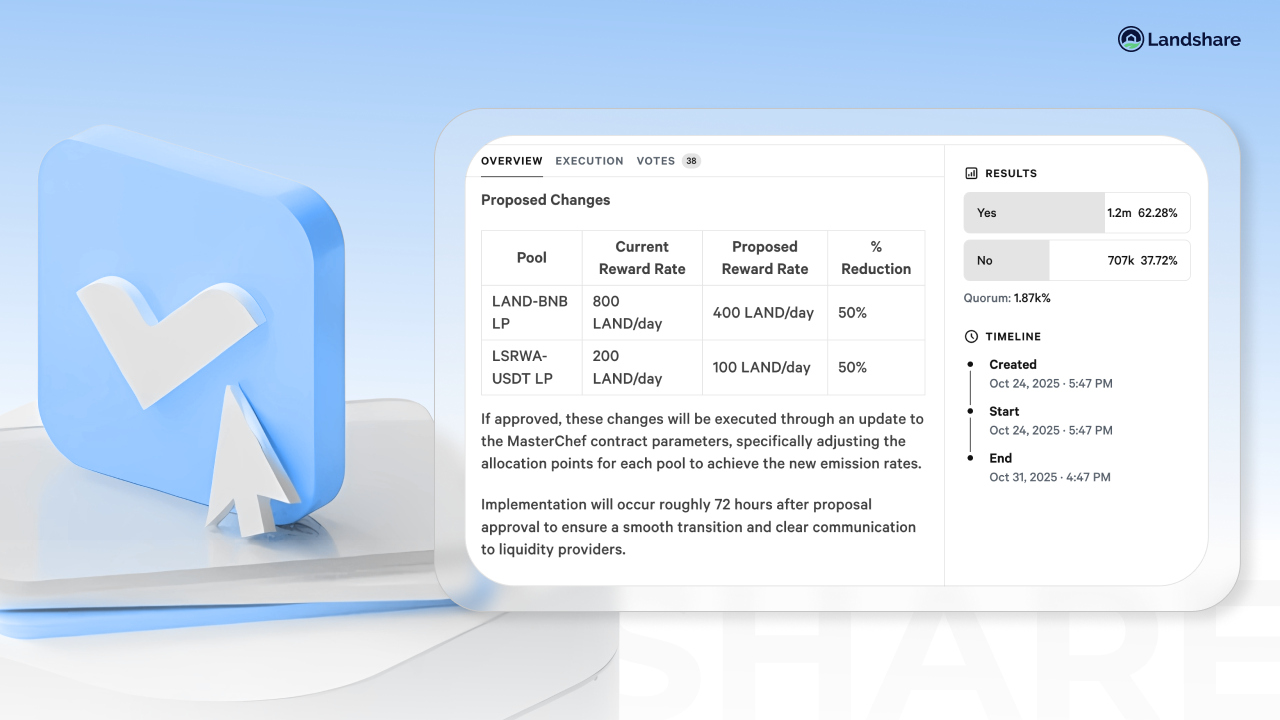
In late October, the community voted to reduce LP emissions by 50% across both the LAND–BNB and LSRWA–USDT pools – with the proposal passing at 62.28% in favor.
This important step helps:
✅ Reduce daily LAND inflation
✅ Strengthen token scarcity and price stability
✅ Extend the reward pool lifespan
✅ Encourage long-term liquidity participation
The change will take effect within 48 hours of approval and marks another move toward a more balanced, sustainable economy for Landshare v2.
🗳️ View the full proposal and results
Tokenization Hub Breakdown
We released a comprehensive guide to the Landshare Tokenization Hub, explaining how property owners can now go beyond simple tokenization to access real investors, liquidity, and on-chain utility.
The Hub bridges traditional real estate with blockchain finance – creating a pathway for real-world assets to generate ongoing yield, transparency, and accessibility.

4.5M+ LAND Staked
October also marked another key milestone – over 4.5 million LAND tokens (nearly half of the total supply) are now staked in vaults. This incredible community achievement reflects growing confidence in Landshare’s long-term vision and token utility.
Community Townhall Incoming
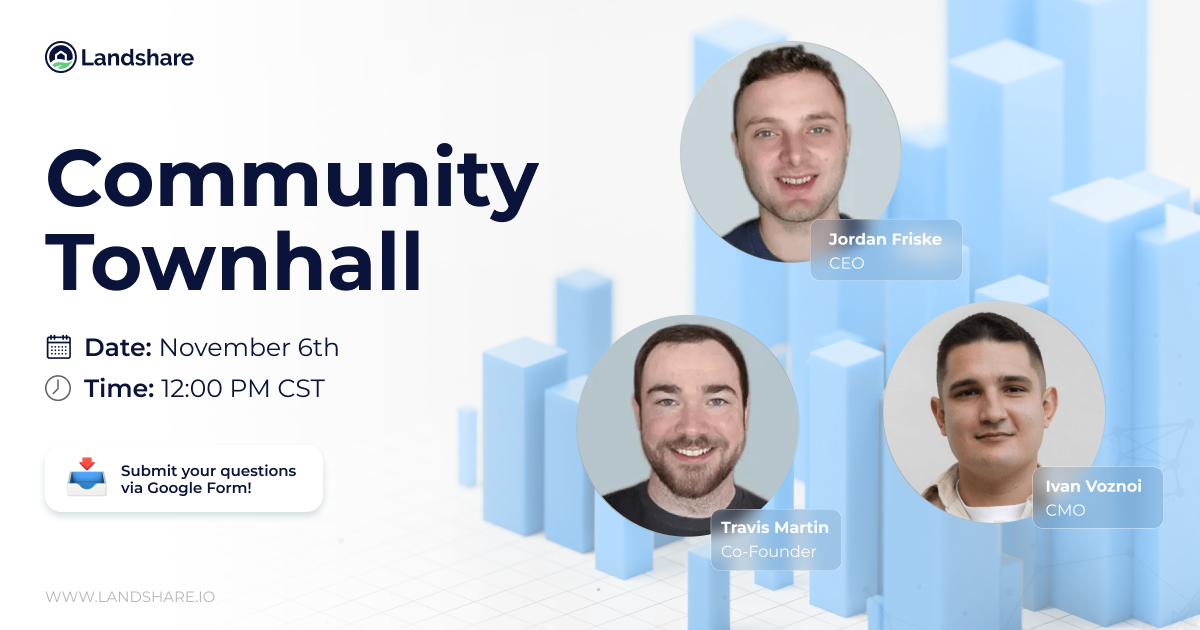
We’re excited to announce our next Community Townhall, happening Thursday, November 6 at 12 PM CST or 6 PM CET on X Spaces!
Join Jordan (CEO), Travis (Co-Founder), and Ivan (CMO) as they discuss everything happening with Landshare v2, recent DAO proposals, and take your questions live.
Looking Ahead
With Landshare v2 on the horizon, the foundation is set for a new phase of growth and adoption. In the coming weeks, we’ll be sharing more details on the RAV launch, the Points Campaign, and other major milestones driving our ecosystem forward.
Stay tuned – the future of real estate is being built on-chain, and we’re just getting started.
Tokenization Hub Breakdown
Landshare Team
Real estate tokenization has been a buzzword for years. Yet in practice, most projects have failed to move beyond press releases and empty promises. Too often, blockchain has been used as a veneer to package illiquid or low-quality assets, leaving investors with tokens that serve little purpose and property owners with no meaningful results.
Without investors, liquidity, or secondary markets, tokenization becomes little more than an on-chain spreadsheet — a digital record of ownership that no one can trade or invest in. For property owners, that means time and money spent “tokenizing” without achieving key goals: raising capital, expanding visibility, or unlocking value.
A Smarter Path Forward
For real estate tokenization to truly work, it needs to deliver tangible investment outcomes. After years of building and refining on-chain real estate products, Landshare has developed a model designed to do exactly that.
The Landshare Tokenization Hub transforms tokenization from a passive concept into an active investment process — connecting high-quality properties with real investors, liquidity pathways, and a live blockchain economy.
The Tokenization Hub Solution
Most platforms stop once a token is created. Landshare’s Tokenization Hub goes further , offering a complete pathway for property owners to bring their assets on-chain and immediately engage investors.
Each project is structured for success from day one, with:
- Customized tokenization models tailored to each property
- Transparent fundraising mechanics with defined soft and hard caps
- Built-in integration with the broader Landshare ecosystem
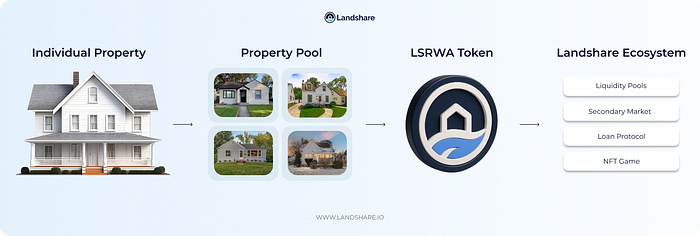
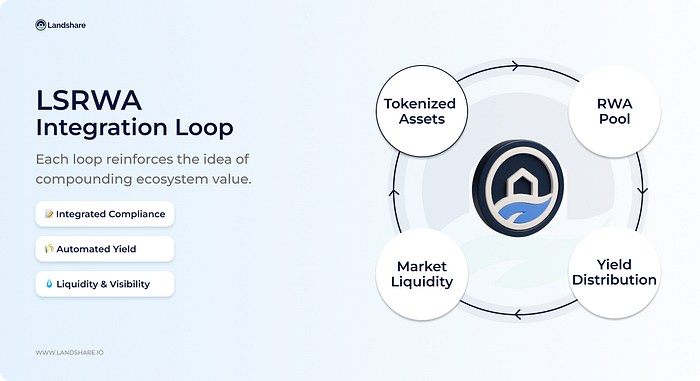
By connecting directly to Landshare’s existing network of investors and DeFi infrastructure, offerings can attract participation as soon as they launch. Once a fundraising goal is met, property tokens are deposited into the Landshare RWA Pool, linking them to ongoing liquidity, yield mechanisms, and secondary market exposure.
Why This Model Delivers Real Results
Where others leave property owners to manage marketing, compliance, and liquidity alone, the Tokenization Hub handles these as part of a unified process. This integration dramatically increases the likelihood of meeting fundraising goals and sustaining long-term engagement.
Integration with the Landshare RWA Token (LSRWA) is central to this model. Rather than isolated tokens with no market, each property becomes part of a shared, liquid environment that generates yield and investor participation. Individual assets can still be represented, extracted, or traded independently when needed.
For example, a multifamily property owner might tokenize 20% equity to raise $500,000 on-chain, connect the asset to the RWA Pool for ongoing yield, and maintain full transparency for investors — all within a compliant, accessible framework.
How It Works
- Tokenize the Property: Landshare collaborates with property owners to create a digital representation of equity, income rights, or hybrid participation.
- Launch the Offering: The property is listed on the Tokenization Hub with defined terms, caps, and transparent investor access.
- Fundraising & Validation: Investors participate directly on-chain. Once the soft cap is reached, funds are secured and the offering is finalized.
- Ecosystem Integration: Tokens are deposited into the Landshare RWA Pool, and investors receive LSRWA tokens representing pooled value and yield potential.
- Ongoing Value Creation: Property owners gain lasting benefits through liquidity, visibility, and investor engagement. As new assets are added to the pool, owners can rebalance between equity and cash, making real estate a more dynamic and liquid asset than ever before.

Built for Real-World Impact
The Landshare Tokenization Hub is more than a technical service — it’s a complete ecosystem designed to make real estate investment active, liquid, and accessible.
For property owners, it offers a streamlined way to raise capital and connect with global investors.
For investors, it provides exposure to yield-generating, on-chain assets backed by transparent real-world value.
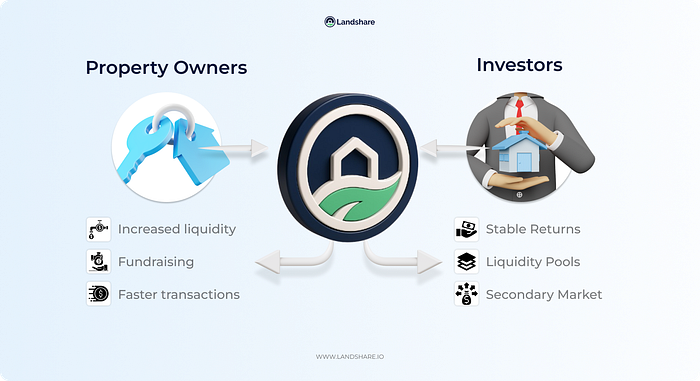
In an industry crowded with static tokens and overhyped promises, the Tokenization Hub delivers what tokenization was always meant to achieve — real outcomes, real liquidity, and real-world results.
🏡 About Landshare
Landshare is a tokenized real estate ecosystem that enables seamless investment in real-world assets on the blockchain. With Landshare, you can own a share of a real-world property simply by holding our RWA Tokens ($LSRWA). Our platform offers a secure, transparent, and efficient way to invest in real estate without traditional barriers.
- Website: landshare.io
- Twitter: @Landshareio
- Community: t.me/landshare
Plume Network's SEC Approval Means RWA Projects Are Closer to the $16T Market
Landshare Team
On October 6, Plume Network announced on its social media that it had been approved to be an SEC-registered transfer agent. This is a big milestone for the RWA industry, signaling that the traditional financial system is welcoming tokenized assets.
Transfer agents basically manage important back-end work and are the official record-keepers for securities issuers. So, essentially, they maintain shareholder registries, record ownership changes, issue certificates, and handle other corporate actions.
Plume’s approval means these critical functions can now be managed on-chain for tokenized securities. This is a pretty big deal, as it gives Plume and its users formal regulatory standing under U.S. law for on-chain securities.
Experts believe that this approval can boost the global RWA market, and top players like Landshare can benefit from it due to the increased regulatory clarity.
Why is the SEC’s Approval Important for Plume Network?
So, first, understand the roles of a registered transfer agent to get a better understanding of its importance.
In traditional finance, a transfer agent is usually a company or bank that tracks who owns a company’s securities and facilitates trades. They ensure every share transfer, stock split, or dividend payment is accurately recorded and reported. Now, let’s understand how this traditional role will work in the world of blockchain.
Post Link
By replicating these roles on-chain, Plume’s platform can securely log every token sale or dividend distribution in an immutable ledger, while also syncing with regulators. As Plume explains, its transfer-agent protocol will “link cap tables and reporting directly to SEC and DTCC systems”.
This means tokenized equity and debt on Plume can behave like traditional securities, but will be managed better with the help of blockchain technology.
Plume’s CEO believes that this regulation “exists to protect investors’ rights as shareholders,” and Plume’s on-chain solution is meant to simplify the processes under that framework.
Its Impact:
Experts believe that the registration will open up several doors for the RWA market because of the ‘trust factor’. Being registered means there are no risks as far as legality is concerned. When an industry or its top player receives a green flag from the government regulatory agencies, institutional capital follows.
BlackRock, Fidelity, JP Morgan, etc., are already looking to build blockchain-based products. This will further invite them to join the RWA growth story and possibly super-boost it.
Moreover, another important benefit is that tokenized securities can now flow through compliance obstacles. This means issuance times can be cut from months to weeks with the help of smart contracts. Similarly, on-chain dividends and ICOs can enjoy the same legal protections as Wall Street offerings.
What Does This Mean For The RWA Market?
Plume’s win comes at a time when analysts are already forecasting a massive growth in tokenized RWAs over the next decade. Institutions now value tokenization as a way to digitize everything from private credit to real estate. Also, the numbers are pretty optimistic as well.
A Boston Consulting Group report estimated the global asset-tokenization market could reach about $16.1 trillion by 2030. The industry has already grown by almost 380% in the past three years. To put things into perspective, today’s entire crypto market cap is smaller than those figures. Even some of the more conservative forecasts still show multi-trillion growth.
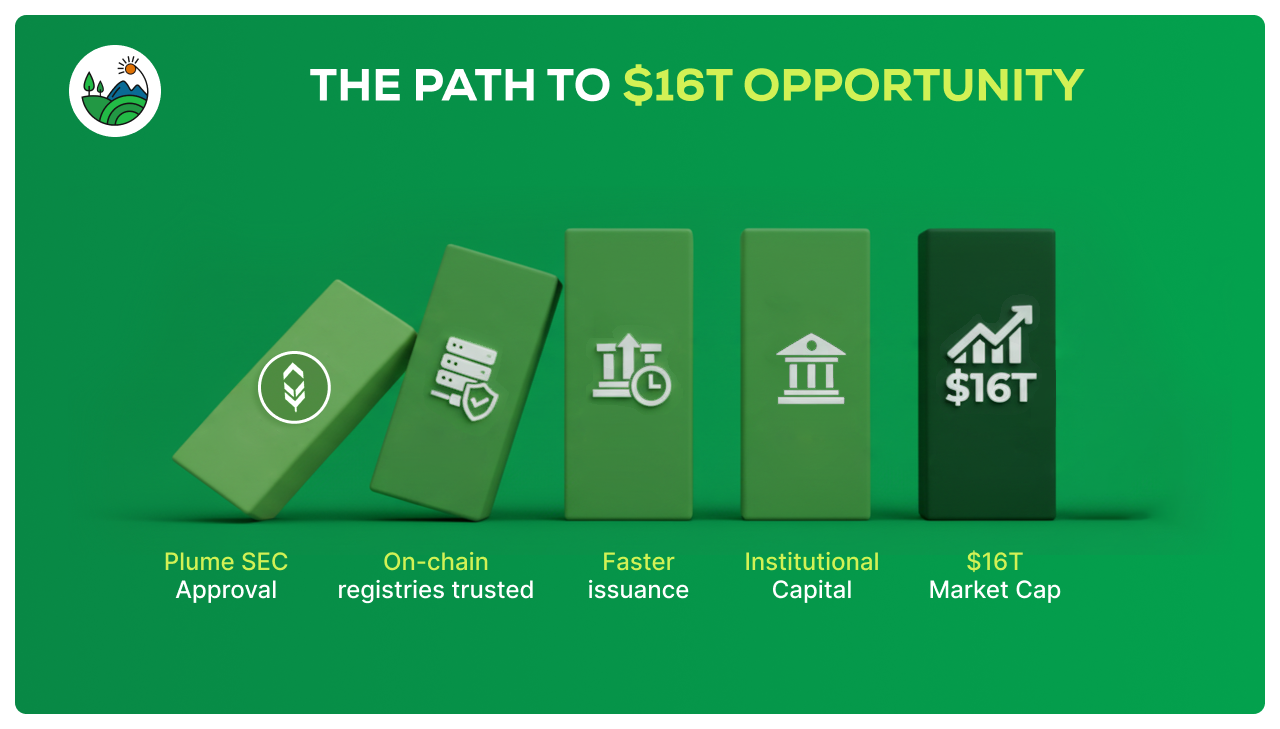
If these estimates can materialize in the days to come, RWA is well-positioned to be one of the largest markets in the world of modern finance.
Moreover, the external conditions are favoring this industry. Governments and regulators worldwide are creating proper frameworks. For instance, Asia-Pacific markets are running pilots for digital bonds and crafting standardized rules for security tokens.
These developments and the excitement of retail investors in this category build confidence that the $16T opportunity is actually very real.
How Will Landshare Benefit From This?
Landshare stands at the forefront of benefiting from this opportunity because of its early entry and real-world utility. This is very important as institutions seek new projects that have use cases that can help them capture a considerable market share.
Moreover, Landshare already operates as a compliant RWA platform. For instance, each Landshare RWA Token (LSRWA) is a security token representing fractional shares of a U.S. real estate portfolio, and buyers must pass KYC/AML checks.
The fact that regulators are now approving on-chain transfer agents shows the industry’s efforts are finally paying off. Here are some more factors that can help Landshare be one of the top RWA contenders:
1. Regulatory Credibility: Plume’s SEC status essentially means that tokenized securities can operate within established rules. Landshare’s approach aligns with these principles. So, investors can be assured that their projects sit within a legal framework designed to protect shareholders.
2. Investor Confidence: Every step toward clear regulation lifts confidence. The recently passed GENIUS Act, the SEC’s staff statements on liquid-staking, and the Trump administration’s overall outlook towards the crypto market have been fairly positive.
Similarly, Plume being approved as a SEC-registered blockchain transfer agent tells retail and institutional investors that projects like Landshare aren’t mere experiments. They’re rather a part of a regulated financial evolution.
Moreover, it means regulators see value in on-chain tokens, and that kind of signal helps legitimize the space Landshare operates in.
3. Landshare’s Own Progress: Landshare isn’t about hype. It is rather focused on delivering value from day one. The project has already sold four houses on the BNB chain. It is also providing consistent rental returns to the investors in its properties.
Moreover, the team remains focused on delivering stable, compliant returns from real estate growth.
Conclusion
So, now we know that the recent news was about more than just Plume Network being approved by the SEC to be a transfer agent. It rather has a much bigger impact on the RWA market as a whole.
While the industry continues to grow, for Landshare, it is the right time to innovate further and add more value to consumers’ lives.